
No products in the cart.










Introduction to Sand Screw Conveyor
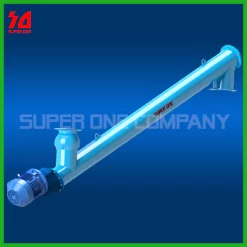
A sand screw conveyor is a type of industrial equipment widely used for transporting sand and gravel in construction, mining, and agriculture.
This equipment provides a stable, continuous, and efficient conveying solution, saving labor costs and ensuring productivity.
Advantages of Sand Screw Conveyor
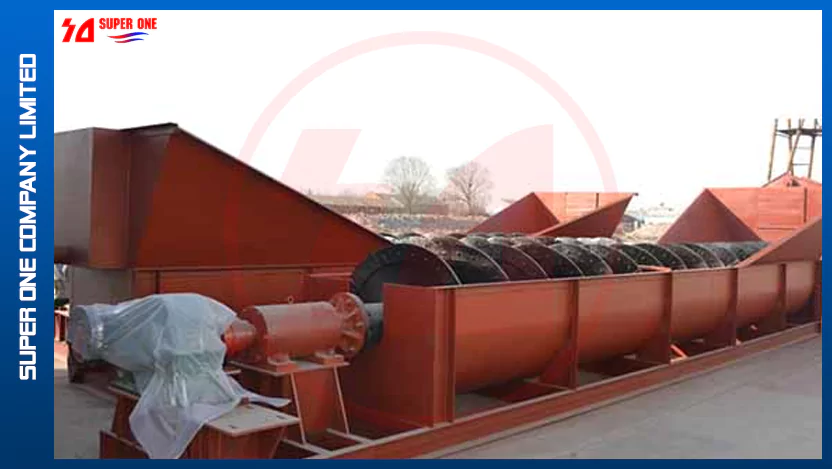
Sand screw conveyors have many notable advantages compared to other conveying and handling methods. Their benefits include the ability to handle large volumes of material, easy integration into automated systems, space saving, and the ability to operate in harsh environments.
Some outstanding advantages include:
Continuous, stable conveying: Long-term operation without clogging.
Handling wet sand and gravel: Still performs well with high moisture content materials.
Suitable for narrow spaces: Compact design, easy to install in limited areas.
Reasonable investment cost: Lower cost compared to belt conveyors and many other devices.
Types of Sand Screw Conveyor
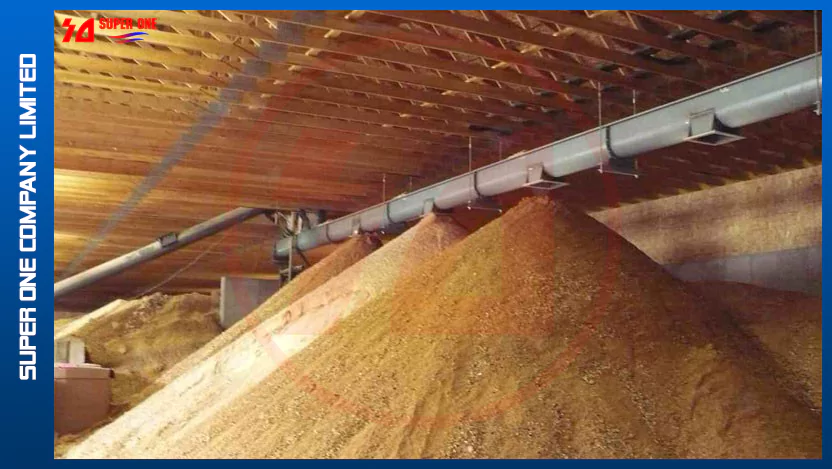
There are various types of sand and gravel screw conveyors with different designs and applications, depending on the specific needs of the project and the material to be conveyed. Some common types include:
Structure: This type has no shaft inside the screw, helping to avoid clogging when transporting viscous, sticky, or wet sand.
Application: Commonly used for conveying sand, sludge, and flowable materials.
Structure: Consists of two screws operating in parallel or crossing each other, capable of transporting large volumes of material.
Application: Widely used in production processes, stone mining, and sand & gravel handling.
3. Single Screw Conveyor
Structure: Consists of a single screw. This is the simplest type.
Application: Used for handling smaller quantities of material.
Structure: The screw is enclosed inside a tube, forming a channel for material movement.
Application: Used where sand and gravel must be protected from spilling into the environment.
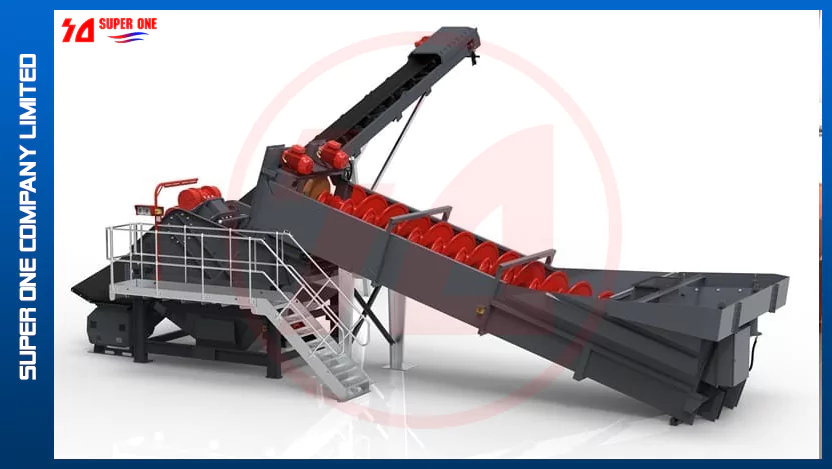
5. Inclined Screw Conveyor
Structure: Designed to transport materials up or down at an angle.
Application: Commonly used to elevate sand and gravel from lower to higher positions or vice versa.
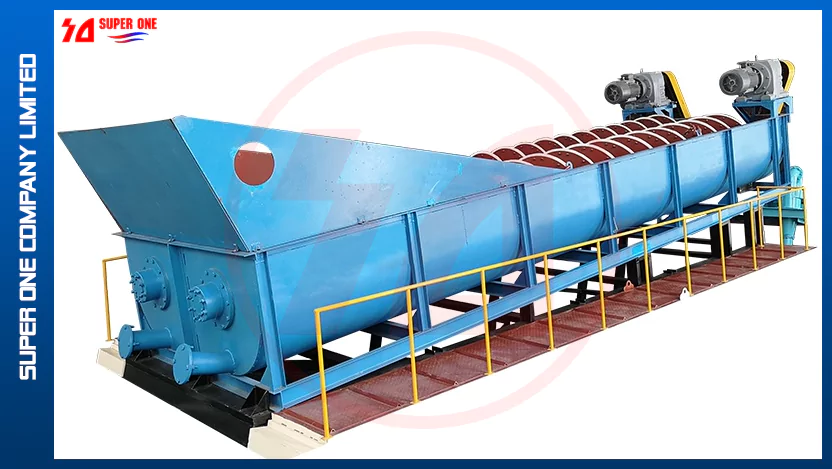
Structure and Working Principle of Sand Screw Conveyor
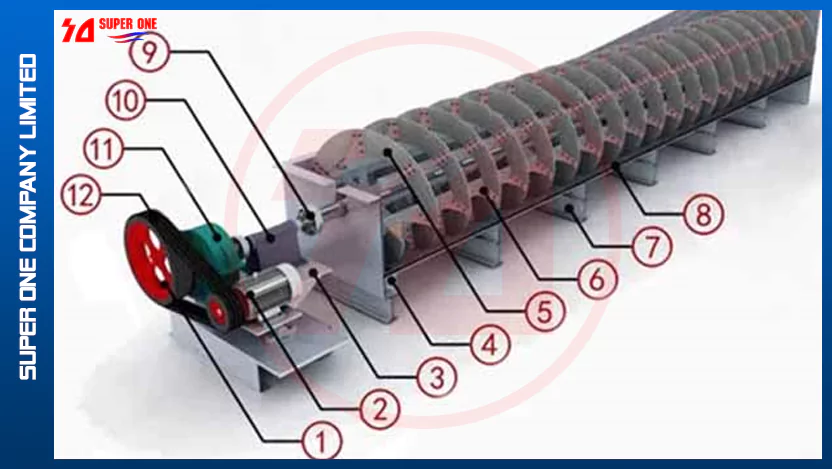
Main components:
Main shaft
Shaft bearing
Drive belt
Motor
Bearing frame
Sand discharge outlet
Screw blade
Blade frame
Support frame
Screw casing
Main frame
Casing edge
End cover plate
Shaft adjustment
Tension frame
Working principle:
The working principle of sand screw conveyors is similar to other types but they are divided into two main categories:
Type 1: Used to transport sand from one location to another based on the basic spiral principle. This type has high capacity and includes accessories to reduce impact and wear when conveying sand and gravel.
Type 2: Features a wide structure with multiple shafts working together, mainly for stirring and washing impurities in ores. The screw blades are partially submerged in water, stirring so that sand and ore particles dissolve and settle. They are then carried out of the water by the blades and delivered to another processing line.
Technical Specifications of Sand Screw Conveyor
Screw diameter: 100 – 1000 mm
Conveying length: 3 – 20 m
Motor power: 2.2 – 22 kW
Voltage: 380V – 50Hz
Conveying capacity: 5 – 200 tons/hour
Material: CT3 steel, stainless steel, or wear-resistant steel
Design: Closed trough or round tube, horizontal, inclined, or vertical installation
Applications: Concrete batching plants, construction material factories, mining industry
Investment Cost of Sand Screw Conveyor
When investing in a sand screw conveyor, aside from capacity and durability, cost is a primary concern. The investment cost is not fixed but depends on factors such as size, material, design, and working environment.
Key factors affecting cost:
Screw size and length: Larger and longer conveyors cost more.
Motor power: Higher capacity motors increase investment.
Material: Standard steel is cheaper, while stainless or wear-resistant steel costs more.
Working environment: Corrosive/harsh conditions require special materials, raising cost.
Design type: Open trough, closed tube, horizontal, inclined, or vertical all differ in price.
Customization: Special designs increase cost significantly.
Installation cost: Includes labor, supports, and electrical systems.
Initial maintenance: Lubrication, inspection, and early component replacement.
Contact Us
We are committed to providing valuable benefits when you contact us. With many years of accumulated experience and a team of knowledgeable experts, we are confident in offering you the best service and effective solutions for your needs.
When ordering from Super One, you will receive the following benefits:
Free design consultation
2D drawings
3D drawings
CO, CQ of materials
Invoices and documents
After-sales maintenance service
Minimum 1-year warranty
Competitive market pricing

Leading Manufacturer of Sand Screw Conveyor | Super One
Bài viết liên quan


